DOES THE PATIENT HAVE TO FEEL BETTER AFTER TREATMENT?

Does the Patient Have to Feel Better by the End of the Treatment?
Trust your hands
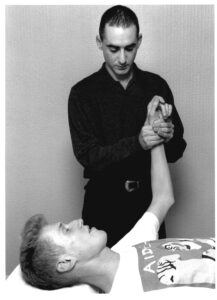
When I was a young bodyworker, before I qualified as an acupuncturist, I sometimes felt insecure when giving massage. I’d begin working on a client, and they’d start shifting around on the couch, adjusting their arms and legs, trying to get comfortable. As an inexperienced practitioner, I’d immediately start wondering what I was doing wrong. Was my touch too light? Too heavy? Should I be doing something different?
But within a few months of starting out, whenever this happened, a little phrase began to appear in my mind: “Trust your hands.”
Just because the client seemed restless, there was no need to engage in nervous conversation or change what I was doing. Trust your hands: I simply needed to focus on the massage, do the work with good heart, and let the person settle. And every time, that’s exactly what happened.
Forty years later, I still say those words to myself, but over this long period of time, their meaning has changed. These days, as a practitioner of palpation-based acupuncture and moxibustion, my hands tell me considerably more than they did when I was a young massage therapist.
Two kinds of feedback
During a recent group coaching session, a practitioner described treating a patient with shoulder pain using Ontake Warm Bamboo. She worked distally on his leg, and during the treatment, he repeatedly reported that his shoulder was feeling better. Encouraging feedback, but when they sat down at the end of the session, he told her that the pain was the same as when he’d arrived. Understandably, she felt discouraged.
This raises an interesting question. Does the patient have to feel better by the end of the treatment for us to know that something has changed? To answer this question, we need to use different kinds of feedback mechanisms. There are two broad sets available to us.
What the patient feels
Patients can tell us about changes in several ways:
- Pain: Has it reduced in intensity, changed character, or moved somewhere else?
- Relaxation: Do they feel calmer, more comfortable, or less tense?
- Range of movement: Can they turn their neck further, raise their arm more easily, or move without the same restriction?
- Perception of the problem: Does the symptom feel different, less intrusive, or somehow less important, even if its intensity hasn’t changed?
Sometimes the improvement is dramatic. A patient arrives with shoulder pain rated eight out of ten and leaves reporting zero. At other times, the changes are more subtle. But what the patient feels is only one part of the feedback available to us.
What the practitioner feels
In palpation-based acupuncture and moxibustion, we have other ways to assess the effects of treatment. Some of these are relatively easy to learn, and others are more advanced.
Depending on the style we’re practising, we might look for changes in:
- Abdomen: Have areas of tension, tenderness, or resistance softened?
- Skin: Has the texture, temperature, or lustre improved?
- Appearance: Has the patient’s face softened? Do they look more relaxed? Has their expression or general demeanour changed?
- Pulse: Have the qualities of strength, depth and rate improved?
Another source of information can be your own awareness of your body. My teacher Stephen Birch has said, “If it isn’t happening in you, it’s not happening in them.” So what you feel in your own body can be a significant indicator of your patient’s improvement. Do you feel lighter and happier than when they walked in? I often feel an opening in my chest as my patient improves. These are very subtle perceptions, which Stephen says are part of more advanced practice.
The blind practitioners of the Toyohari association have amazed me many times with their observations of change. Once, when I was trying to locate an acupuncture point, the late Mr Yanagishita told me that I’d found the point – from across the room, with his back to me!
All these strands are part of the conversation between our hands and the patient’s body. They help us decide whether to continue, change direction, or stop. But what the patient experiences and what we perceive don’t always match.
When there’s a mismatch between what they say and what you feel
Sometimes the patient and I disagree about what we’re feeling. I compare the left and right ST 25, and I feel the right is more reactive, but the patient feels the left is more painful. Who do you follow?
When you’re a beginner, patient feedback is really important for calibrating your hands. But as you get more experienced, you can start to trust your hands more. After all, you eventually know what induration feels like, and sometimes patients don’t have much body awareness. For example, many male patients won’t tell me if a point is painful, because they’ve grown up ignoring pain. But if I change the wording to “Does this point feel different?”, they often agree.
That said, we always have to balance the patient’s perspective with our own. Sometimes they will tell me something that my hands have missed. At other times, my palpatory findings suggest that something has changed, even though the patient doesn’t yet feel any different. The skill lies in knowing how to weigh these different sources of information.
When the pulse changes but the headache doesn’t
Recently I was treating someone with a headache. His pulse felt better, but the headache was not relieved. As a younger practitioner, I might have felt compelled to keep treating. Perhaps another needle, another point, or a different technique would finally produce the response I was looking for. These days, I’m more inclined to consider the whole picture.
Has the pulse improved? Has the abdomen softened? Has the patient’s face changed? Are the signs I use to assess treatment telling me that something has shifted? Sometimes it’s that opening in my own chest. If so, I may decide that I’ve done enough.
It’s like throwing a rock into the centre of a pond. It takes time for the ripples to reach the shore. I’m fairly confident that the changes I’ve detected will eventually reach the patient’s symptoms. And I can say to the patient, quite confidently, “I know you’ve still got a headache right now, but don’t worry. Let’s see how you feel later today.” I’m not promising that the headache will disappear, but I’m quietly confident.
What happens after the patient leaves?
Patients sometimes report that their symptoms improved during treatment, returned afterwards, and then improved again later that day or the following morning. Others experience a temporary aggravation before reporting improvement.
In Japanese acupuncture, a transient reaction following treatment is sometimes described as mengen (瞑眩), often translated as a ‘healing crisis’.
In Toyohari, we use this term for temporary reactions such as fatigue, drowsiness, or an aggravation of the presenting symptoms. These are expected to settle within twenty-four hours. A reaction that continues beyond this period raises the possibility of overtreatment or inappropriate treatment and should no longer be thought of as mengen.
Returning to the practitioner in my coaching group, it’s possible her patient experienced a temporary aggravation before improving. It’s also possible that the treatment was too strong, or inappropriate. Unfortunately, we don’t know yet: he’d left for an eight-week trip, so she couldn’t follow up with him.
And that’s worth remembering. An unknown outcome isn’t necessarily an unsuccessful one.
Trust your hands
When I first began telling myself to trust my hands, I was learning to trust my ability to give a good massage. It freed me from interpreting every movement of the client as a failure of my technique. I could focus on the work, stay present, and let things unfold.
Decades of practising palpation-based acupuncture have given those words a much broader meaning. Now, ‘my hands’ encompass all the feedback mechanisms I’ve learnt to use: the pulse, the abdomen, the skin, the changes in a patient’s appearance, and the responses I observe during treatment.
So, when the patient still has a headache, but the pulse and abdomen have improved, I trust my hands enough to stop treating and let time tell us what happens next. That, perhaps, is the biggest difference between the insecure young bodyworker I once was and the practitioner I’ve become. I still tell myself: “Trust your hands.”
But these days, I understand better what they’re telling me.
DOES THE PATIENT HAVE TO FEEL BETTER AFTER TREATMENT? Read More »