manaka

KLLP: A Variation on the K3L Pattern in Manaka System Acupuncture

One of the joys of working with Manaka System Acupuncture is that while the four-step protocol gives us structure, it doesn’t lock us into rigidity. Each step has a specific goal. The goal of Step 1 is to release the abdomen. Once you have figured out the pattern, the point selection is usually clear. But with MSA, there’s always room for refinement and careful variation.

A good example is the K3L pattern.
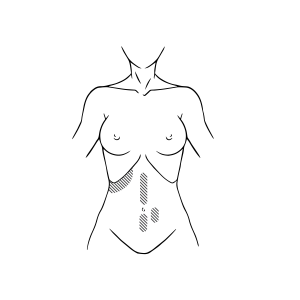
K3L: a combination of the Cross Syndrome with the Yin Qiao Ren pair

The K3L pattern manifests as a Cross Syndrome with the co-presentation of Yin Qiao Ren. If we treated each channel pair separately with one ion pumping cord, we would need three cords. Stephen Birch developed a more economical way by combining the Yin Qiao Ren pair with LI 4 and LIV 3.

The standard K3L point combination is:

PointSideColour
LU 7LeftRed
KID 6RightBlack
LI 4RightBlack
LIV 3LeftRed


The pattern gets its name from the first letters of the four points. One begins with the letter K and the other three with the letter L: K3L.

LI 4 and LIV 3 are the component points of the famous Four Gates, or Si Guan treatment. Traditionally, these points, when needled bilaterally, are thought to move qi and blood strongly,  releasing physical tension and relieving generalised pain. They’re also thought to calm the nervous system and relieve stress and anxiety.

Perhaps this was part of Stephen’s thinking, but he was also thinking structurally. LI 4 is needled on the right hand and thus affects the upper right quadrant (the tight subcostals on the right), and LIV 3 is needled on the left foot, affecting the lower left quadrant. Thus, these two points address the Cross Syndrome part of the K3L pattern.

In practice, I have found a small variation useful in some patients. I call it KLLP. The KLLP variation substitutes P 7 for LI 4, giving us P 7 and LIV 3, together with KID 6 and LU 7.

The point combination is:

PointSideColour
LU 7LeftRed
KID 6RightBlack
P 7RightBlack
LIV 3LeftRed

I use this variation when the standard K3L pattern fails to release the Cross Syndrome component, especially when the patient is less angry/uptight and more anxious/worried.

When the presentation has more of the familiar stress, frustration, or anger quality, LI 4 and LIV 3 may still be the better match, especially if the pulse is wiry.

The rationale for the KLLP variation is the jue yin connection between the pericardium and liver channels. Manaka used these two points on the same side for his hepatitis treatment. But just like LI 4 on the right hand,  P 7 on the right affects the upper right quadrant. Contralaterally with LIV 3, they treat the Cross Syndrome. In some patients, P 7 seems to provide a stronger release than LI 4.

This combination is not a replacement for the standard K3L pattern, but an option to consider when the K3L abdominal finding is present. If the patient is more anxious than angry or if the subcostal reaction only partially releases, then this variation can be very helpful.

As always in MSA, the real test is what happens under our hands. Do the abdominal reactions change? When KLLP is well matched, I find that the hara changes rapidly.

This is one of the reasons I enjoy teaching Manaka System Acupuncture. The four-step protocol gives us a clear framework, but within it we are still observing, testing, and adjusting.

KLLP is a small clinical variation on an existing pattern, offered in the same spirit in which I received the work: as a practical tool for thoughtful practitioners.

MORE ABOUT MANAKA MADE SIMPLE

https://sayoshibooks.orankivity.com/books/

KLLP: A Variation on the K3L Pattern in Manaka System Acupuncture Read More »
MANAKA MADE SIMPLE (LEVEL 1) STE CROIX, FRANCE 2026

MANAKA-SYSTEM ACUPUNCTURE LEVEL 1

Image of Dr Manaka

Overwhelmed by Chasing the Dragon’s Tail? Curious about Japanese Acupuncture and Moxibustion? This transformative workshop will simplify your learning and train you to start using this unique healing system for yourself in just three days.


Yoshio Manaka was a poet, artist, scholar, physician, and healer. He lived for and was inspired by ideas and invention. At the pinnacle of his life, he reached a level of healing skill that made him renowned in Japan and overseas.

 Different from other styles of acupuncture in many ways, Manaka System Acupuncture is based on the idea of “maximum benefit with minimum intervention.” It uses very light needling and moxibustion techniques and a variety of polarity devices to enhance channel flow. This makes it very comfortable for patients to receive.


Join us from September 18th to 20th, 2026, in Ste Croix, France, for an immersive three-day workshop to unravel the brilliance of Dr Manaka’s diagnostic and treatment system. This system is like a backstage pass to understanding the body’s structure and meridians at root and branch levels in an effective and surprisingly straightforward way.

Forget the mystery; this system is all about procedures and observations you can easily replicate and validate. We’re diving deep into Dr Manaka’s insights into channels, points, the abdomen, and reflex areas – all with a hands-on, palpation-based approach. In Japanese acupuncture, when it comes to checking the effectiveness of each technique, touch is everything, especially abdominal palpation.

This workshop isn’t all theoretical. It’s a fascinating playground of practical protocols and techniques. that you will explore and acquire. By the end of these three days, you’ll have learned and practised the basics of Manaka’s system and be ready to apply all four steps confidently. Consider this workshop your passport to a deeper understanding of acupuncture, moxibustion, and palpation, elevating your clinical game to new heights.

The course will be taught in English and will focus on both the theory and practice of the following:

  • Manaka’s octahedral theory of the eight extraordinary vessels
  • Use of the eight extraordinary vessels with ion pumping cords
  • Palpation skills, diagnosing from the abdomen and channels
  • Japanese moxibustion skills, including warm needle and rice grain moxa techniques
  • Manaka’s isophasal treatments using holographic systems of the ear and hand
  • Japanese superficial needling, correct insertion with a guide tube
  • Sotai stretches and channel release exercises for musculoskeletal disorders & structural adjustment

By the end of these three days,  you will be able to treat your patients with this system. Levels 2 and 3 are optional courses that may be taken later to deepen your understanding of Manaka’s system for treating the root. They include many other Japanese methods for treating the branch, including Dr. Manaka’s wooden hammer and needle, clinical applications of the 24-hour, 10-day, and 60-day cycles, and specialized Japanese applications of moxibustion, cupping, and bloodletting.


LEARNING MANAKA: WHAT PEOPLE SAY


Studying Dr Manaka’s Yin Yang balancing method brought acupuncture alive for me after ten years of TCM. It took me out of my head and into my hands with dynamic changes occurring within a few seconds: tight tender points on the abdomen relax; both patient and practitioner experience immediate feedback, also reflected in changes to symptoms. Manaka’s rich and eclectic system brings to life many East Asian Medicine theories and allows the practitioner to be creative whilst  working within an elegant & structured treatment model.

MARIAN FIXLER


Learning Dr Manaka’s methodology and approach provided the correct medical lens to look through. The teachings gave me confidence because they synthesised everything I had learned up to that point. Acupuncture studies at university didn’t give me the medical or clinical application the way Manaka strategies did. I will be eternally grateful for those teachings and their transmission by Paul Movsessian, a great teacher and clinician in his own right.

KEITO DESU

Studying Manaka style was a Eureka moment. Within weeks it had transformed my practice. It provided a logical, sequential way of treating that was flexible, inclusive and open to new information (Yamamoto New Scalp Acupuncture, Korean Hand Therapy,  auriculotherapy etc.). It made complete sense that the information received through palpation was the root of a diagnosis. Manaka has opened many doors (moxa, Sotai, ontake, Japanese acupuncture etc.) and continues to thrill me forty-three years after qualifying as an acupuncturist.

MAREK URBANOWICZ

The work of Dr. Manaka not only transforms the way you practice but also the goal of treatment and the relationship you create with your patients. The ability to have treatment protocols that are not only clinically sound and successful but also to have maximum patient comfort allowing for the healing process to be established.

PAUL MOVSESSIAN

Manaka provided me with a systematic method to apply my acupuncture treatment.

CAU CECCINI

Manaka-style acupuncture is a good introduction to Japanese acupuncture before getting to know other styles. Manaka acupuncture requires detailed skills that train us as practitioners to perform any acupuncture style more thoroughly. Through Manaka, I’ve learned many kinds of moxibustion styles, abdominal palpation and gentle needling.

TEDY ABADI

 l learned Manaka seven years ago. Manaka’s system was logical and the first that made real sense to me. Making a diagnosis by inspecting the abdomen and then witnessing the immediate reactions blew my mind! It’s simple and direct.

ALEXANDRE REIS


MANAKA MADE SIMPLE (LEVEL 1) STE CROIX, FRANCE 2026 Read More »

MANAKA MADE SIMPLE LEVEL 1 (BAHASA INDONESIA) JULY 2026

MANAKA-STYLE ACUPUNCTURE LEVEL 1

Image of Dr Manaka

Kewalahan membaca buku Chasing the Dragons Tail? Ingin tau tentang Akupunktur dan Moksibusi Jepang? Workshop yang transformatif ini akan menyederhanakan pembelajaran anda dan melatih anda sedemikian rupa hingga hanya dalam tiga hari saja, anda sudah bisa mulai menggunakan sistem penyembuhan yang unik ini.

Yoshio Manaka adalah seorang pujangga, seniman, ilmuwan, dokter, dan penyembuh. Hidupnya terinspirasi dan didedikasikan untuk penemuan dan ide pemikiran. Dalam puncak kehidupannya, mencapai level teknik penyembuhan yang membuatnya terkenal di dalam dan luar Jepang.

Akupunktur Jepang berbeda dengan Akupunktur China dalam banyak hal. Berdasarkan filosofi “manfaat maksimal dengan intervensi minimal”, akupunktur jepang menggunakan penjaruman dan moksibusi yang sangat lembut, dan juga berbagai alat beda polaritas yang menambah aliran di meridian. Hal ini membuat pasien nyaman dalam menerima efek penyembuhannya.

 Workshop tiga hari ini, akan memberikan kepada anda lingkup pengetahuan untuk merancang diagnosis dan rencana terapi komprehensif dalam sistem Dr. Manaka: sebuah pendekatan terstruktur dalam pengobatan akar dan cabang dari ketidakseimbangan di tubuh.

Kursus ini akan fokus pada pemahaman Dr. Manaka pada sistem meridian, dan interaksi dinamika antara meridian, akupoin, perut, dan area refleks. Sistem ini bukanlah sistem yang misterius, melainkan didasarkan pada percobaan dan observasi yang dapat kita amati langsung, dan ulangi sendiri. Palpasi, terutama palpasi abdomen, adalah yang paling penting dalam memeriksa dan menguji keefektifan setiap teknik yang kita lakukan

Workshop ini berbasis dan menekankan pada praktikum. Setelah tiga hari, anda akan mulai dapat melakukan terapi pada pasien dengan seluruh 4 Langkah Sistem Manaka. Perkenalan terhadap pendekatan Manaka adalah pintu gerbang untuk memahami teknik Akupunktur, Moksibusi, dan Palpasi lebih dalam, dan membawa praktik klinis anda naik level dan lebih percaya diri.  Kursus ini akan diajarkan dalam Bahasa Inggris dan diterjemahkan ke dalam Bahasa Indonesia, dan fokus pada teori serta praktikum beberapa hal berikut:

  • Teori Octahedral Manaka mengenai Delapan Meridian Istimewa
  • Memanfaatkan Delapan Meridian Istimewa dan Ion Pumping Cords.
  • Seni palpasi dan diagnonis berdasarkan pola temuan abdomen dan meridian.
  • Keterampilan moksibusi Jepang, termasuk teknik Jarum Hangat, dan moksibusi bulir beras.
  • Terapi isophasal Manaka menggunakan sistem holografik tangan dan telinga.
  • Penjaruman dangkal Jepang, teknik penusukan yang benar dengan menggunakan tabung pandu.
  • Peregangan Sotai dan olahraga untuk melancarkan meridian untuk gangguan muskuloskeletal dan struktural.

Setelah menyelesaikan pelatihan tiga hari ini, anda sudah akan bisa menerapi klien dengan sistem ini. Levels 2 dan 3 adalah kursus opsional yang dapat diambil di kemudian hari untuk memperdalam pengertian anda terhadap sistem Manaka untuk mengobati akar. Kursus lanjutan ini juga akan menyertakan berbagai metode lain untuk melakukan terapi akar, termasuk Palu Kayu Manaka, aplikasi klinik siklus 24 jam, 10 hari, dan 60 harian, serta aplikasi yang spesialistik teknik moksubusi, kop, dan bloodletting Jepang.

UNTUK INFORMASI LEBIH LANJUT HUBUNGI


De Holistic

Email: deholistic316@gmail.com
Phone: +62822-6911-0202

Yudhi Gejali

Email: yudhigejali@ymail.com
Phone: +62815-7123-696

LEARNING MANAKA: WHAT PEOPLE SAY


Studying Dr Manaka’s Yin Yang balancing method brought acupuncture alive for me after ten years of TCM. It took me out of my head and into my hands with dynamic changes occurring within a few seconds: tight tender points on the abdomen relax; both patient and practitioner experience immediate feedback, also reflected in changes to symptoms. Manaka’s rich and eclectic system brings to life many East Asian Medicine theories and allows the practitioner to be creative whilst  working within an elegant & structured treatment model.

MARIAN FIXLER

Learning Dr Manaka’s methodology and approach provided the correct medical lens to look through. The teachings gave me confidence because they synthesised everything I had learned up to that point. Acupuncture studies at university didn’t give me the medical or clinical application the way Manaka strategies did. I will be eternally grateful for those teachings and their transmission by Paul Movsessian, a great teacher and clinician in his own right.

KEITO DESU

Studying Manaka style was a Eureka moment. Within weeks it had transformed my practice. It provided a logical, sequential way of treating that was flexible, inclusive and open to new information (Yamamoto New Scalp Acupuncture, Korean Hand Therapy,  auriculotherapy etc.). It made complete sense that the information received through palpation was the root of a diagnosis. Manaka has opened many doors (moxa, Sotai, ontake, Japanese acupuncture etc.) and continues to thrill me forty-three years after qualifying as an acupuncturist.

MAREK URBANOWICZ

The work of Dr. Manaka not only transforms the way you practice but also the goal of treatment and the relationship you create with your patients. The ability to have treatment protocols that are not only clinically sound and successful but also to have maximum patient comfort allowing for the healing process to be established.

PAUL MOVSESSIAN

Manaka provided me with a systematic method to apply my acupuncture treatment.

CAU CECCINI

Manaka-style acupuncture is a good introduction to Japanese acupuncture before getting to know other styles. Manaka acupuncture requires detailed skills that train us as practitioners to perform any acupuncture style more thoroughly. Through Manaka, I’ve learned many kinds of moxibustion styles, abdominal palpation and gentle needling.

TEDY ABADI

 l learned Manaka seven years ago. Manaka’s system was logical and the first that made real sense to me. Making a diagnosis by inspecting the abdomen and then witnessing the immediate reactions blew my mind! It’s simple and direct.

ALEXANDRE REIS


MANAKA MADE SIMPLE LEVEL 1 (BAHASA INDONESIA) JULY 2026 Read More »

MANAKA MADE SIMPLE (LEVEL 1) LAUSANNE 2026

MANAKA-SYSTEM ACUPUNCTURE LEVEL 1

Image of Dr Manaka

Overwhelmed by Chasing the Dragon’s Tail? Curious about Japanese Acupuncture and Moxibustion? This transformative workshop will simplify your learning and train you to start using this unique healing system for yourself in just three days.


Yoshio Manaka was a poet, artist, scholar, physician, and healer. He lived for and was inspired by ideas and invention. At the pinnacle of his life, he reached a level of healing skill that made him renowned in Japan and overseas.

 Different from other styles of acupuncture in many ways, Manaka System Acupuncture is based on the idea of “maximum benefit with minimum intervention.” It uses very light needling and moxibustion techniques and a variety of polarity devices to enhance channel flow. This makes it very comfortable for patients to receive.


Join us from September 4th to 6th, 2026, in Lausanne, Switzerland, for an immersive three-day workshop to unravel the brilliance of Dr Manaka’s diagnostic and treatment system. This system is like a backstage pass to understanding the body’s structure and meridians at root and branch levels in an effective and surprisingly straightforward way.

Forget the mystery; this system is all about procedures and observations you can easily replicate and validate. We’re diving deep into Dr Manaka’s insights into channels, points, the abdomen, and reflex areas – all with a hands-on, palpation-based approach. In Japanese acupuncture, when it comes to checking the effectiveness of each technique, touch is everything, especially abdominal palpation.

This workshop isn’t all theoretical. It’s a fascinating playground of practical protocols and techniques. that you will explore and acquire. By the end of these three days, you’ll have learned and practised the basics of Manaka’s system and be ready to apply all four steps confidently. Consider this workshop your passport to a deeper understanding of acupuncture, moxibustion, and palpation, elevating your clinical game to new heights.

The course will be taught in English and will focus on both the theory and practice of the following:

  • Manaka’s octahedral theory of the eight extraordinary vessels
  • Use of the eight extraordinary vessels with ion pumping cords
  • Palpation skills, diagnosing from the abdomen and channels
  • Japanese moxibustion skills, including warm needle and rice grain moxa techniques
  • Manaka’s isophasal treatments using holographic systems of the ear and hand
  • Japanese superficial needling, correct insertion with a guide tube
  • Sotai stretches and channel release exercises for musculoskeletal disorders & structural adjustment

By the end of these three days,  you will be able to treat your patients with this system. Levels 2 and 3 are optional courses that may be taken later to deepen your understanding of Manaka’s system for treating the root. They include many other Japanese methods for treating the branch, including Dr. Manaka’s wooden hammer and needle, clinical applications of the 24-hour, 10-day, and 60-day cycles, and specialized Japanese applications of moxibustion, cupping, and bloodletting.


LEARNING MANAKA: WHAT PEOPLE SAY


Studying Dr Manaka’s Yin Yang balancing method brought acupuncture alive for me after ten years of TCM. It took me out of my head and into my hands with dynamic changes occurring within a few seconds: tight tender points on the abdomen relax; both patient and practitioner experience immediate feedback, also reflected in changes to symptoms. Manaka’s rich and eclectic system brings to life many East Asian Medicine theories and allows the practitioner to be creative whilst  working within an elegant & structured treatment model.

MARIAN FIXLER


Learning Dr Manaka’s methodology and approach provided the correct medical lens to look through. The teachings gave me confidence because they synthesised everything I had learned up to that point. Acupuncture studies at university didn’t give me the medical or clinical application the way Manaka strategies did. I will be eternally grateful for those teachings and their transmission by Paul Movsessian, a great teacher and clinician in his own right.

KEITO DESU

Studying Manaka style was a Eureka moment. Within weeks it had transformed my practice. It provided a logical, sequential way of treating that was flexible, inclusive and open to new information (Yamamoto New Scalp Acupuncture, Korean Hand Therapy,  auriculotherapy etc.). It made complete sense that the information received through palpation was the root of a diagnosis. Manaka has opened many doors (moxa, Sotai, ontake, Japanese acupuncture etc.) and continues to thrill me forty-three years after qualifying as an acupuncturist.

MAREK URBANOWICZ

The work of Dr. Manaka not only transforms the way you practice but also the goal of treatment and the relationship you create with your patients. The ability to have treatment protocols that are not only clinically sound and successful but also to have maximum patient comfort allowing for the healing process to be established.

PAUL MOVSESSIAN

Manaka provided me with a systematic method to apply my acupuncture treatment.

CAU CECCINI

Manaka-style acupuncture is a good introduction to Japanese acupuncture before getting to know other styles. Manaka acupuncture requires detailed skills that train us as practitioners to perform any acupuncture style more thoroughly. Through Manaka, I’ve learned many kinds of moxibustion styles, abdominal palpation and gentle needling.

TEDY ABADI

 l learned Manaka seven years ago. Manaka’s system was logical and the first that made real sense to me. Making a diagnosis by inspecting the abdomen and then witnessing the immediate reactions blew my mind! It’s simple and direct.

ALEXANDRE REIS


MANAKA MADE SIMPLE (LEVEL 1) LAUSANNE 2026 Read More »

MANAKA MADE SIMPLE (LEVEL 2) DENMARK 2026

MANAKA-SYSTEM ACUPUNCTURE LEVEL 2


”Dr Manaka was fluent in ancient and modern Chinese and Japanese, French, German, and English, along with “smatterings of other languages”. Outside of his passion for medicine, he was a sculptor, a poet, and a painter. Thus, he was a true polymath, a medical Leonardo Da Vinci. Stephen Birch, one of the brightest lights in the Western acupuncture world, described Dr Manaka to me as the only genius he had ever met. Dr Manaka taught Birch and corresponded with him in a process Birch described as “mind-expanding” and “exposing oneself to a kind of knowledge and curiosity virus”. This infection of ideas and thinking led to the English publication of Chasing the Dragon’s Tail, written by Birch with Manaka’s input and guidance. It was a seminal book on acupuncture and acupuncture research.”

Oran Kivity–Moxa in Motion (2019)

Dr Manaka’s brilliance wasn’t just conceptual—it was intuitive, exploratory, and relentlessly practical. He wasn’t interested in theory for its own sake; every idea had to prove itself through clinical application. This spirit of deep inquiry and innovation shaped his four-step system—a progressive framework that integrates yin-yang polarities, structure, and biorhythms into a cohesive whole. Level 2 invites you into the next layer of that system: a space where precision meets creativity, and needles, moxa, and movement combine. Here, you’ll learn not just what to do, but why—and how to adapt these principles to the unique needs of each patient.

“Studying with Manaka was mind-expanding and like exposing myself to a kind of knowledge and curiosity virus.”
—Stephen Birch

Now it’s time to add depth and dimension to each of the four steps—building the confidence to apply them fluidly and effectively in real clinical situations.


Empowering Objectives

Once again, you’ll embark on a second transformative adventure. Level 1 opened your mind—after Level 2, you’ll wield your new skills with precision and confidence. You will be able to:

  • Describe a four-channel set and test the effects of placing different polarities upstream and downstream on the channels

  • Practise Manaka’s unique application of the polar channel pairs, using positive and negative polarities on the mother and child points as an alternative to the master–coupled points of the Eight Extras

  • Confidently apply root and branch treatment with okyu, including Sawada’s Taiji protocol, and unlock more branch formulae from the Matsushima Kindle Single

  • Calculate the open point and harness the power of Chinese biorhythms with the 24-hour, 10-day, and 60-day cycles to release pressure-pain reactions on the belly and resolve diagnostic stalemates in coexisting patterns

  • Practise Manaka’s Step 4 use of phase points on the 24-hour cycle to bring relief to stubborn symptoms

  • Work with Manaka’s wooden needle and hammer, and apply his remarkable concept of meridian frequencies from Step 1 to Step 4

  • Perform five new Sotai exercises to adjust the body’s structure for Step 3—with and without okyu

  • Learn to insert hinaishin intradermal needles, and compare the use of empishin, hinaishin, and ryu

  • Apply each technique to the appropriate part of the body with confidence and clarity

  • Use five channel stretches with moxa to release the neck and upper limb


This three-day course will reinforce the concepts of Level 1 and elevate your clinical skills, expanding your repertoire at every step. And with slightly extended days, there’ll be plenty of time for hands-on practice and review. We strongly advise booking soon, as places are limited to thirty participants.

LEARNING MANAKA: WHAT PEOPLE SAY


Studying Manaka style was a Eureka moment. Within weeks it had transformed my practice. It provided a logical, sequential way of treating that was flexible, inclusive and open to new information (Yamamoto New Scalp Acupuncture, Korean Hand Therapy,  auriculotherapy etc.). It made complete sense that the information received through palpation was the root of a diagnosis. Manaka has opened many doors (moxa, Sotai, ontake, Japanese acupuncture etc.) and continues to thrill me forty-three years after qualifying as an acupuncturist.

MAREK URBANOWICZ

The work of Dr. Manaka not only transforms the way you practice but also the goal of treatment and the relationship you create with your patients. The ability to have treatment protocols that are not only clinically sound and successful but also to have maximum patient comfort allowing for the healing process to be established.

PAUL MOVSESSIAN


MANAKA MADE SIMPLE (LEVEL 2) DENMARK 2026 Read More »

MANAKA MADE SIMPLE (LEVEL 2) SWITZERLAND 2026

MANAKA-SYSTEM ACUPUNCTURE LEVEL 2


”Dr Manaka was fluent in ancient and modern Chinese and Japanese, French, German, and English, along with “smatterings of other languages”. Outside of his passion for medicine, he was a sculptor, a poet, and a painter. Thus, he was a true polymath, a medical Leonardo Da Vinci. Stephen Birch, one of the brightest lights in the Western acupuncture world, described Dr Manaka to me as the only genius he had ever met. Dr Manaka taught Birch and corresponded with him in a process Birch described as “mind-expanding” and “exposing oneself to a kind of knowledge and curiosity virus”. This infection of ideas and thinking led to the English publication of Chasing the Dragon’s Tail, written by Birch with Manaka’s input and guidance. It was a seminal book on acupuncture and acupuncture research.”

Oran Kivity–Moxa in Motion (2019)

Dr Manaka’s brilliance wasn’t just conceptual—it was intuitive, exploratory, and relentlessly practical. He wasn’t interested in theory for its own sake; every idea had to prove itself through clinical application. This spirit of deep inquiry and innovation shaped his four-step system—a progressive framework that integrates yin-yang polarities, structure, and biorhythms into a cohesive whole. Level 2 invites you into the next layer of that system: a space where precision meets creativity, and needles, moxa, and movement combine. Here, you’ll learn not just what to do, but why—and how to adapt these principles to the unique needs of each patient.

“Studying with Manaka was mind-expanding and like exposing myself to a kind of knowledge and curiosity virus.”
—Stephen Birch

Now it’s time to add depth and dimension to each of the four steps—building the confidence to apply them fluidly and effectively in real clinical situations.


Empowering Objectives

Once again, you’ll embark on a second transformative adventure. Level 1 opened your mind—after Level 2, you’ll wield your new skills with precision and confidence. You will be able to:

  • Describe a four-channel set and test the effects of placing different polarities upstream and downstream on the channels

  • Practise Manaka’s unique application of the polar channel pairs, using positive and negative polarities on the mother and child points as an alternative to the master–coupled points of the Eight Extras

  • Confidently apply root and branch treatment with okyu, including Sawada’s Taiji protocol, and unlock more branch formulae from the Matsushima Kindle Single

  • Calculate the open point and harness the power of Chinese biorhythms with the 24-hour, 10-day, and 60-day cycles to release pressure-pain reactions on the belly and resolve diagnostic stalemates in coexisting patterns

  • Practise Manaka’s Step 4 use of phase points on the 24-hour cycle to bring relief to stubborn symptoms

  • Work with Manaka’s wooden needle and hammer, and apply his remarkable concept of meridian frequencies from Step 1 to Step 4

  • Perform five new Sotai exercises to adjust the body’s structure for Step 3—with and without okyu

  • Learn to insert hinaishin intradermal needles, and compare the use of empishin, hinaishin, and ryu

  • Apply each technique to the appropriate part of the body with confidence and clarity

  • Use five channel stretches with moxa to release the neck and upper limb


This three-day course will reinforce the concepts of Level 1 and elevate your clinical skills, expanding your repertoire at every step. And with slightly extended days, there’ll be plenty of time for hands-on practice and review. We strongly advise booking soon, as places are limited to thirty participants.

LEARNING MANAKA: WHAT PEOPLE SAY


Studying Manaka style was a Eureka moment. Within weeks it had transformed my practice. It provided a logical, sequential way of treating that was flexible, inclusive and open to new information (Yamamoto New Scalp Acupuncture, Korean Hand Therapy,  auriculotherapy etc.). It made complete sense that the information received through palpation was the root of a diagnosis. Manaka has opened many doors (moxa, Sotai, ontake, Japanese acupuncture etc.) and continues to thrill me forty-three years after qualifying as an acupuncturist.

MAREK URBANOWICZ

The work of Dr. Manaka not only transforms the way you practice but also the goal of treatment and the relationship you create with your patients. The ability to have treatment protocols that are not only clinically sound and successful but also to have maximum patient comfort allowing for the healing process to be established.

PAUL MOVSESSIAN


MANAKA MADE SIMPLE (LEVEL 2) SWITZERLAND 2026 Read More »

MANAKA MADE SIMPLE (LEVEL 1) SWITZERLAND 2026

MANAKA-SYSTEM ACUPUNCTURE LEVEL 1

Image of Dr Manaka

Overwhelmed by Chasing the Dragon’s Tail? Curious about Japanese Acupuncture and Moxibustion? This transformative workshop will simplify your learning and train you to start using this unique healing system for yourself in just three days.


Yoshio Manaka was a poet, artist, scholar, physician, and healer. He lived for and was inspired by ideas and invention. At the pinnacle of his life, he reached a level of healing skill that made him renowned in Japan and overseas.

 Different from other styles of acupuncture in many ways, Manaka System Acupuncture is based on the idea of “maximum benefit with minimum intervention.” It uses very light needling and moxibustion techniques and a variety of polarity devices to enhance channel flow. This makes it very comfortable for patients to receive.


Join us from March 7th to 9th, 2025, in Winterthur, Switzerland, for an immersive three-day workshop to unravel the brilliance of Dr Manaka’s diagnostic and treatment system. This system is like a backstage pass to understanding the body’s structure and meridians at root and branch levels in an effective and surprisingly straightforward way.

Forget the mystery; this system is all about procedures and observations you can easily replicate and validate. We’re diving deep into Dr Manaka’s insights into channels, points, the abdomen, and reflex areas – all with a hands-on, palpation-based approach. In Japanese acupuncture, when it comes to checking the effectiveness of each technique, touch is everything, especially abdominal palpation.

This workshop isn’t all theoretical. It’s a fascinating playground of practical protocols and techniques. that you will explore and acquire. By the end of these three days, you’ll have learned and practised the basics of Manaka’s system and be ready to apply all four steps confidently. Consider this workshop your passport to a deeper understanding of acupuncture, moxibustion, and palpation, elevating your clinical game to new heights.

The course will be taught in English and will focus on both the theory and practice of the following:

  • Manaka’s octahedral theory of the eight extraordinary vessels
  • Use of the eight extraordinary vessels with ion pumping cords
  • Palpation skills, diagnosing from the abdomen and channels
  • Japanese moxibustion skills, including warm needle and rice grain moxa techniques
  • Manaka’s isophasal treatments using holographic systems of the ear and hand
  • Japanese superficial needling, correct insertion with a guide tube
  • Sotai stretches and channel release exercises for musculoskeletal disorders & structural adjustment

By the end of these three days,  you will be able to treat your patients with this system. Levels 2 and 3 are optional courses that may be taken later to deepen your understanding of Manaka’s system for treating the root. They include many other Japanese methods for treating the branch, including Dr. Manaka’s wooden hammer and needle, clinical applications of the 24-hour, 10-day, and 60-day cycles, and specialized Japanese applications of moxibustion, cupping, and bloodletting.


LEARNING MANAKA: WHAT PEOPLE SAY


Studying Dr Manaka’s Yin Yang balancing method brought acupuncture alive for me after ten years of TCM. It took me out of my head and into my hands with dynamic changes occurring within a few seconds: tight tender points on the abdomen relax; both patient and practitioner experience immediate feedback, also reflected in changes to symptoms. Manaka’s rich and eclectic system brings to life many East Asian Medicine theories and allows the practitioner to be creative whilst  working within an elegant & structured treatment model.

MARIAN FIXLER


Learning Dr Manaka’s methodology and approach provided the correct medical lens to look through. The teachings gave me confidence because they synthesised everything I had learned up to that point. Acupuncture studies at university didn’t give me the medical or clinical application the way Manaka strategies did. I will be eternally grateful for those teachings and their transmission by Paul Movsessian, a great teacher and clinician in his own right.

KEITO DESU

Studying Manaka style was a Eureka moment. Within weeks it had transformed my practice. It provided a logical, sequential way of treating that was flexible, inclusive and open to new information (Yamamoto New Scalp Acupuncture, Korean Hand Therapy,  auriculotherapy etc.). It made complete sense that the information received through palpation was the root of a diagnosis. Manaka has opened many doors (moxa, Sotai, ontake, Japanese acupuncture etc.) and continues to thrill me forty-three years after qualifying as an acupuncturist.

MAREK URBANOWICZ

The work of Dr. Manaka not only transforms the way you practice but also the goal of treatment and the relationship you create with your patients. The ability to have treatment protocols that are not only clinically sound and successful but also to have maximum patient comfort allowing for the healing process to be established.

PAUL MOVSESSIAN

Manaka provided me with a systematic method to apply my acupuncture treatment.

CAU CECCINI

Manaka-style acupuncture is a good introduction to Japanese acupuncture before getting to know other styles. Manaka acupuncture requires detailed skills that train us as practitioners to perform any acupuncture style more thoroughly. Through Manaka, I’ve learned many kinds of moxibustion styles, abdominal palpation and gentle needling.

TEDY ABADI

 l learned Manaka seven years ago. Manaka’s system was logical and the first that made real sense to me. Making a diagnosis by inspecting the abdomen and then witnessing the immediate reactions blew my mind! It’s simple and direct.

ALEXANDRE REIS


MANAKA MADE SIMPLE (LEVEL 1) SWITZERLAND 2026 Read More »

MANAKA MADE SIMPLE LEVEL 3 (INDONESIA) 2025

MANAKA MADE SIMPLE LEVEL 3 – Blood stasis, prognostication

&

PRACTICE, PRACTICE, PRACTICE

In this third instalment of Manaka Made Simple,  we’re delving deeper into both theoretical and clinical approaches to broaden your expertise. The workshop will cover Japanese concepts of blood stasis, with a special focus on Manaka’s unique insights into prognostication. We’ll be honing in on the diagnosis and treatment of blood stasis in chronic conditions, employing techniques such as cupping, bloodletting and moxibustion.

To further enrich your understanding of Step 1 and Step 4, we’ll be exploring more advanced ion pumping combinations and strategies, along with new moxibustion variations  such as kyukonshin (okyu and chishin in combination) and large cone moxibustion.

Objectives

Level 3 consolidates the learning of the previous two weekends. With less emphasis on theory and an increased focus on practical application, this weekend is designed to help you master the final components of Manaka’s approach. After three days of theory and practice, you’ll feel more confident to provide more accurate prognoses for each patient, make realistic judgments about what you can or cannot achieve with your treatments and apply an effective treatment from what is now a broad range of options.

Highlights of Level 3 include the introduction of more ion pumping treatments at Step 1, and, for the first time, strategies for ion pumping at Step 4. These include Manaka’s burns treatment, and ion pumping for knee pain, fatigue and anxiety. And there are two new and important modalities to get to grips with: cupping and bloodletting, both excellent for chronic conditions that don’t respond well to your usual treatments.

Key topics covered in the workshop include:

  • Kyukonshin—the integration of okyu with
  • Chinetsukyu—large cone moxibustion.
  • Extra IPC patterns and strategies, addressing whiplash, burns, and scars.
  • Kyukaku—cupping techniques.
  • Shiraku—comprehensive coverage of Japanese bloodletting practices.

Building on the foundations laid in Levels 1 and 2, Level 3 aims to reinforce your theoretical knowledge with much more hands-on practice. This three-day course is designed with a slightly longer day to give you plenty of time to master the new material and bring your clinical skills to new heights. We strongly advise participants to book soon as places are limited to thirty people.

MANAKA MADE SIMPLE LEVEL 3 (INDONESIA) 2025 Read More »

MANAKA MADE SIMPLE LEVEL 1 (BAHASA INDONESIA) 2024

MANAKA-STYLE ACUPUNCTURE LEVEL 1

Image of Dr Manaka

Kewalahan membaca buku Chasing the Dragons Tail? Ingin tau tentang Akupunktur dan Moksibusi Jepang? Workshop yang transformatif ini akan menyederhanakan pembelajaran anda dan melatih anda sedemikian rupa hingga hanya dalam tiga hari saja, anda sudah bisa mulai menggunakan sistem penyembuhan yang unik ini.

Yoshio Manaka adalah seorang pujangga, seniman, ilmuwan, dokter, dan penyembuh. Hidupnya terinspirasi dan didedikasikan untuk penemuan dan ide pemikiran. Dalam puncak kehidupannya, mencapai level teknik penyembuhan yang membuatnya terkenal di dalam dan luar Jepang.

Akupunktur Jepang berbeda dengan Akupunktur China dalam banyak hal. Berdasarkan filosofi “manfaat maksimal dengan intervensi minimal”, akupunktur jepang menggunakan penjaruman dan moksibusi yang sangat lembut, dan juga berbagai alat beda polaritas yang menambah aliran di meridian. Hal ini membuat pasien nyaman dalam menerima efek penyembuhannya.

 Workshop tiga hari ini, akan memberikan kepada anda lingkup pengetahuan untuk merancang diagnosis dan rencana terapi komprehensif dalam sistem Dr. Manaka: sebuah pendekatan terstruktur dalam pengobatan akar dan cabang dari ketidakseimbangan di tubuh.

Kursus ini akan fokus pada pemahaman Dr. Manaka pada sistem meridian, dan interaksi dinamika antara meridian, akupoin, perut, dan area refleks. Sistem ini bukanlah sistem yang misterius, melainkan didasarkan pada percobaan dan observasi yang dapat kita amati langsung, dan ulangi sendiri. Palpasi, terutama palpasi abdomen, adalah yang paling penting dalam memeriksa dan menguji keefektifan setiap teknik yang kita lakukan

Workshop ini berbasis dan menekankan pada praktikum. Setelah tiga hari, anda akan mulai dapat melakukan terapi pada pasien dengan seluruh 4 Langkah Sistem Manaka. Perkenalan terhadap pendekatan Manaka adalah pintu gerbang untuk memahami teknik Akupunktur, Moksibusi, dan Palpasi lebih dalam, dan membawa praktik klinis anda naik level dan lebih percaya diri.  Kursus ini akan diajarkan dalam Bahasa Inggris dan diterjemahkan ke dalam Bahasa Indonesia, dan fokus pada teori serta praktikum beberapa hal berikut:

  • Teori Octahedral Manaka mengenai Delapan Meridian Istimewa
  • Memanfaatkan Delapan Meridian Istimewa dan Ion Pumping Cords.
  • Seni palpasi dan diagnonis berdasarkan pola temuan abdomen dan meridian.
  • Keterampilan moksibusi Jepang, termasuk teknik Jarum Hangat, dan moksibusi bulir beras.
  • Terapi isophasal Manaka menggunakan sistem holografik tangan dan telinga.
  • Penjaruman dangkal Jepang, teknik penusukan yang benar dengan menggunakan tabung pandu.
  • Peregangan Sotai dan olahraga untuk melancarkan meridian untuk gangguan muskuloskeletal dan struktural.

Setelah menyelesaikan pelatihan tiga hari ini, anda sudah akan bisa menerapi klien dengan sistem ini. Levels 2 dan 3 adalah kursus opsional yang dapat diambil di kemudian hari untuk memperdalam pengertian anda terhadap sistem Manaka untuk mengobati akar. Kursus lanjutan ini juga akan menyertakan berbagai metode lain untuk melakukan terapi akar, termasuk Palu Kayu Manaka, aplikasi klinik siklus 24 jam, 10 hari, dan 60 harian, serta aplikasi yang spesialistik teknik moksubusi, kop, dan bloodletting Jepang.

UNTUK INFORMASI LEBIH LANJUT HUBUNGI


Aswadi Ibrahim

Email: aswadiibrahim@gmail.com
Phone: +6285242274424

Yudhi Gejali

Email: yudhigejali@ymail.com
Phone: +62815-7123-696

LEARNING MANAKA: WHAT PEOPLE SAY


Studying Dr Manaka’s Yin Yang balancing method brought acupuncture alive for me after ten years of TCM. It took me out of my head and into my hands with dynamic changes occurring within a few seconds: tight tender points on the abdomen relax; both patient and practitioner experience immediate feedback, also reflected in changes to symptoms. Manaka’s rich and eclectic system brings to life many East Asian Medicine theories and allows the practitioner to be creative whilst  working within an elegant & structured treatment model.

MARIAN FIXLER

Learning Dr Manaka’s methodology and approach provided the correct medical lens to look through. The teachings gave me confidence because they synthesised everything I had learned up to that point. Acupuncture studies at university didn’t give me the medical or clinical application the way Manaka strategies did. I will be eternally grateful for those teachings and their transmission by Paul Movsessian, a great teacher and clinician in his own right.

KEITO DESU

Studying Manaka style was a Eureka moment. Within weeks it had transformed my practice. It provided a logical, sequential way of treating that was flexible, inclusive and open to new information (Yamamoto New Scalp Acupuncture, Korean Hand Therapy,  auriculotherapy etc.). It made complete sense that the information received through palpation was the root of a diagnosis. Manaka has opened many doors (moxa, Sotai, ontake, Japanese acupuncture etc.) and continues to thrill me forty-three years after qualifying as an acupuncturist.

MAREK URBANOWICZ

The work of Dr. Manaka not only transforms the way you practice but also the goal of treatment and the relationship you create with your patients. The ability to have treatment protocols that are not only clinically sound and successful but also to have maximum patient comfort allowing for the healing process to be established.

PAUL MOVSESSIAN

Manaka provided me with a systematic method to apply my acupuncture treatment.

CAU CECCINI

Manaka-style acupuncture is a good introduction to Japanese acupuncture before getting to know other styles. Manaka acupuncture requires detailed skills that train us as practitioners to perform any acupuncture style more thoroughly. Through Manaka, I’ve learned many kinds of moxibustion styles, abdominal palpation and gentle needling.

TEDY ABADI

 l learned Manaka seven years ago. Manaka’s system was logical and the first that made real sense to me. Making a diagnosis by inspecting the abdomen and then witnessing the immediate reactions blew my mind! It’s simple and direct.

ALEXANDRE REIS


MANAKA MADE SIMPLE LEVEL 1 (BAHASA INDONESIA) 2024 Read More »

MANAKA MADE SIMPLE LEVEL 2 (BRAZIL)

MANAKA-SYSTEM ACUPUNCTURE LEVEL 2


”Dr Manaka was fluent in ancient and modern Chinese and Japanese, French, German, and English, along with “smatterings of other languages”. Outside of his passion for medicine, he was a sculptor, a poet, and a painter. Thus, he was a true polymath, a medical Leonardo Da Vinci. Stephen Birch, one of the brightest lights in the Western acupuncture world, described Dr Manaka to me as the only genius he had ever met. Dr Manaka taught Birch and corresponded with him in a process Birch described as “mind-expanding” and “exposing oneself to a kind of knowledge and curiosity virus”. This infection of ideas and thinking led to the English publication of Chasing the Dragon’s Tail, written by Birch with Manaka’s input and guidance. It was a seminal book on acupuncture and acupuncture research.”

Oran Kivity–Moxa in Motion (2019)

Continue your exciting journey into Manaka System Acupuncture, delving deeper into the intricate world of inter-channel relationships and the interconnected arts of direct moxa and refined palpation. Develop  more expertise and expand your arsenal of techniques at steps 1 to 4.


Empowering Objectives

Once again, you’ll embark on a second, transformative adventure and on completion of the three days. Level 1 opened your mind and after Level 2, you will wield your new skills with precision and confidence. You will be able to:

  • Describe a four-channel set and test the effects of placing different polarities upstream and downstream on the channels.
  • Practice Manaka’s unique application of the polar channel pairs, using positive and negative polarities on the mother and child points as an alternative to the master and coupled points of the Eight Extras
  • Confidently apply root and branch treatment with okyu including Sawada’s Taiji protocol and unlock more branch formulae from the Matsushima Kindle Single
  • Calculate the open point and harness the power of Chinese biorhythms with the 24-hour, 10-day, and 60-day cycles to: release pressure pain reactions on the belly and solve diagnostic stalemates of coexisting patterns
  • Practise Manaka’s Step 4 use of phase points on the 24-hour cycle to bring relief to stubborn symptoms.
  • Get comfortable with Manaka’s wooden needle and hammer and his remarkable concept of meridian frequencies, applying these ideas in various ways across the board from Step 1 to Step 4.
  • Perform five new Sotai exercises to adjust the body’s structure for Step 3 with and without okyu
  • Learn how to insert hinaishin intradermal needles and compare and contrast the use of empishin, hinaishin and ryu.
  • Confidently apply the above at the appropriate part of the body
  • Apply five channel stretches with moxa to release the neck and upper limb

This three-day course will reinforce the concepts of Level 1 and bring your practice and skills to new heights, expanding your clinical repertoire at each Step. And with a slightly longer day, there’ll be plenty of time to practice and review. We strongly advise participants to book soon as places are limited to thirty people.


LEARNING MANAKA: WHAT PEOPLE SAY


Studying Manaka style was a Eureka moment. Within weeks it had transformed my practice. It provided a logical, sequential way of treating that was flexible, inclusive and open to new information (Yamamoto New Scalp Acupuncture, Korean Hand Therapy,  auriculotherapy etc.). It made complete sense that the information received through palpation was the root of a diagnosis. Manaka has opened many doors (moxa, Sotai, ontake, Japanese acupuncture etc.) and continues to thrill me forty-three years after qualifying as an acupuncturist.

MAREK URBANOWICZ

The work of Dr. Manaka not only transforms the way you practice but also the goal of treatment and the relationship you create with your patients. The ability to have treatment protocols that are not only clinically sound and successful but also to have maximum patient comfort allowing for the healing process to be established.

PAUL MOVSESSIAN


MANAKA MADE SIMPLE LEVEL 2 (BRAZIL) Read More »